

Quick answer
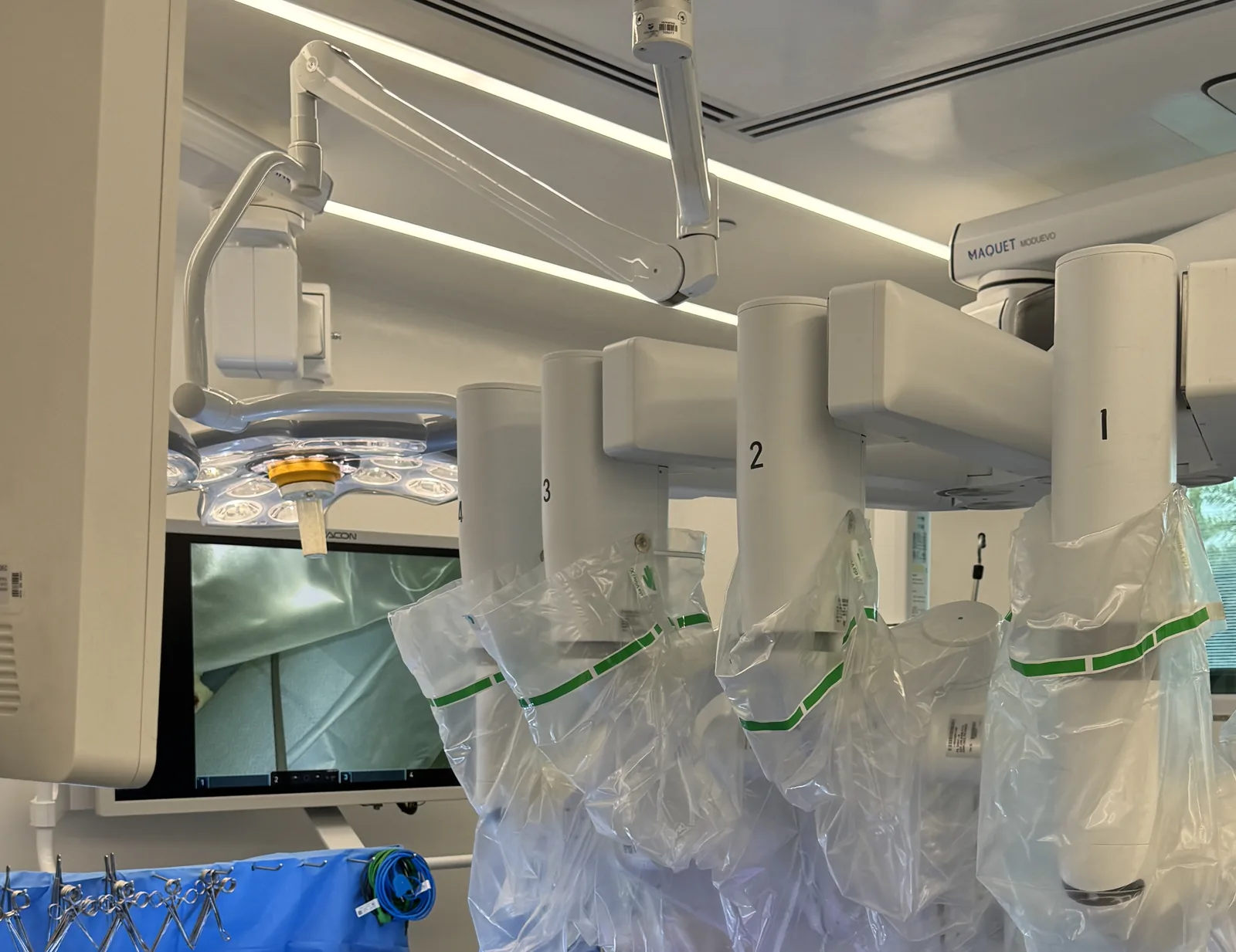
An adrenalectomy removes the adrenal gland, which sits on top of the kidney and produces hormones. It is recommended when the tumor produces excess hormone or when imaging raises suspicion of cancer. A nodule that produces no hormone and looks benign usually does not need surgery. In my practice, I perform the operation with the robot, through the abdomen. The hospital stay is under 24 hours, with no catheter and no drain, and the workup is done together with the endocrinologist.
What the adrenal gland is
We have two adrenal glands, one on top of each kidney. They produce hormones such as cortisol, aldosterone and adrenaline. Many adrenal nodules are found by chance, on a CT scan done for another reason. The European guideline calls them incidentalomas.1
When surgery is recommended
The 2023 European guideline sets out the decision:1
- Excess hormone. When a tumor on one side produces clinically significant excess hormone, surgery is the standard treatment. Examples are excess cortisol, aldosterone or adrenaline.
- Suspected cancer. Nodules of 4 cm or more that look irregular or have high density on unenhanced CT are discussed by a team, and in most cases surgery is the choice.
- Mild excess cortisol. Surgery may be considered case by case when there are cortisol-related conditions such as high blood pressure and diabetes.
Surgery is not recommended when the nodule is on one side, produces no hormone, causes no symptoms and looks benign on imaging.1 If unenhanced CT shows a uniform nodule with a density of up to 10 Hounsfield units, no further imaging is needed.1
The workup before surgery
Before deciding, we need to know whether the nodule produces hormone. This workup is done together with the endocrinologist. It includes the 1 mg dexamethasone test, for cortisol, and metanephrines in blood or urine, for pheochromocytoma, when the nodule does not look like a typical benign adenoma.1
In pheochromocytoma, the tumor that produces adrenaline, the Endocrine Society guideline recommends medication before surgery to prevent heart and blood pressure complications. An alpha-blocker is the first choice.2
How the operation is done
- Position and accessThe patient lies on their side. The robot's instruments go in through small cuts in the abdomen.
- Reaching the adrenalThe surgeon moves aside the organs in front of the gland and finds the adrenal on top of the kidney.
- Controlling the veinThe adrenal vein is identified and closed.
- Removing the glandThe adrenal comes out inside a bag, through one of the cuts, and goes to pathology.
Robotic, laparoscopic or open
For benign tumors that produce hormone, the European guideline recommends a minimally invasive approach, which includes laparoscopic and robotic surgery.1 When cancer is suspected, it suggests this approach for tumors up to 6 cm with no invasion of nearby organs, by an experienced surgeon. If there are signs of invasion, open surgery is recommended.1
A review of 9 studies and 600 patients compared robotic and laparoscopic surgery. The robotic approach had a shorter hospital stay, less bleeding and fewer complications, with similar operating time and conversion rates. The authors note that the number of patients is still small.3
Risks
Risks include bleeding, infection, injury to nearby organs and the need to convert to open surgery.
When the tumor produced cortisol, the other adrenal may take time to work normally again. For this reason, the European guideline recommends stress-dose corticosteroids during surgery when the dexamethasone test shows excess cortisol, and follow-up with the endocrinologist until recovery.1
Recovery
In my practice, the hospital stay is under 24 hours, with no catheter and no drain. Light work resumes after about 2 weeks and strenuous effort after 1 month.
How I approach it
In my practice, the workup is always done together with the endocrinologist. With the hormone and imaging results in hand, I explain whether surgery is recommended and what to expect. I perform adrenalectomy with the robot, through the abdomen (transperitoneal approach). The decision is made together with the patient, and the family takes part if the patient wishes.
When to see a urologist
- If a scan showed a nodule in the adrenal gland
- If hormone tests showed that the nodule produces excess hormone
- If your endocrinologist recommended surgery and you want to know the options
Frequently asked questions
What is an adrenalectomy?+
It is the operation that removes the adrenal gland, which sits on top of the kidney. The European guideline considers it the standard treatment when a tumor on one side produces excess hormone.1
Does every adrenal nodule need surgery?+
No. When the nodule produces no hormone, causes no symptoms and looks benign on imaging, the European guideline recommends against surgery.1
How long will I stay in hospital?+
In my practice, the hospital stay is under 24 hours, with no urinary catheter and no drain.
Do I need to see an endocrinologist?+
Yes. The hormone workup is done together with the endocrinologist before surgery, and the endocrinologist follows the patient afterwards when needed.1
When can I go back to work?+
In my practice, light work resumes after about 2 weeks and strenuous effort after 1 month.
References
- Fassnacht M, Tsagarakis S, Terzolo M, et al. European Society of Endocrinology clinical practice guidelines on the management of adrenal incidentalomas, in collaboration with the European Network for the Study of Adrenal Tumors. Eur J Endocrinol. 2023;189(1):G1-G42. PubMed
- Lenders JW, Duh QY, Eisenhofer G, et al. Pheochromocytoma and paraganglioma: an Endocrine Society clinical practice guideline. J Clin Endocrinol Metab. 2014;99(6):1915-42. PubMed
- Brandao LF, Autorino R, Laydner H, et al. Robotic versus laparoscopic adrenalectomy: a systematic review and meta-analysis. Eur Urol. 2014;65(6):1154-61. European Urology
Would you like to talk about your case?
In the consultation, I go over your tests and your priorities.
Book a consultation